Using Design Thinking to Improve Access to Justice in Kosovo

Client Overview

The USAID Justice Activity in Kosovo is focused on strengthening the justice system and promoting people-centered innovation to build public confidence in the rule of law. The initiative works closely with civil society organizations, judges, court administrators, and public information officers to improve the accessibility, transparency, and quality of justice services in Kosovo.

The Challenge

As part of its broader effort to improve public access to justice, USAID identified two key digital touchpoints that were underperforming: the websites of the Free Legal Aid Agency (FLAA) and the Kosovo Judicial Council (KJC).

Despite being important public resources, both platforms suffered from low engagement and usability issues. Many users—especially those without strong digital skills—struggled to navigate the sites or find relevant information. For FLAA, this meant fewer people accessing legal assistance. For KJC, it meant critical public information—like court schedules and updates—was being overlooked.

The question was clear: could we use a Design Thinking approach to help both institutions rethink their digital experience and deliver platforms that truly meet user needs?

Our Approach

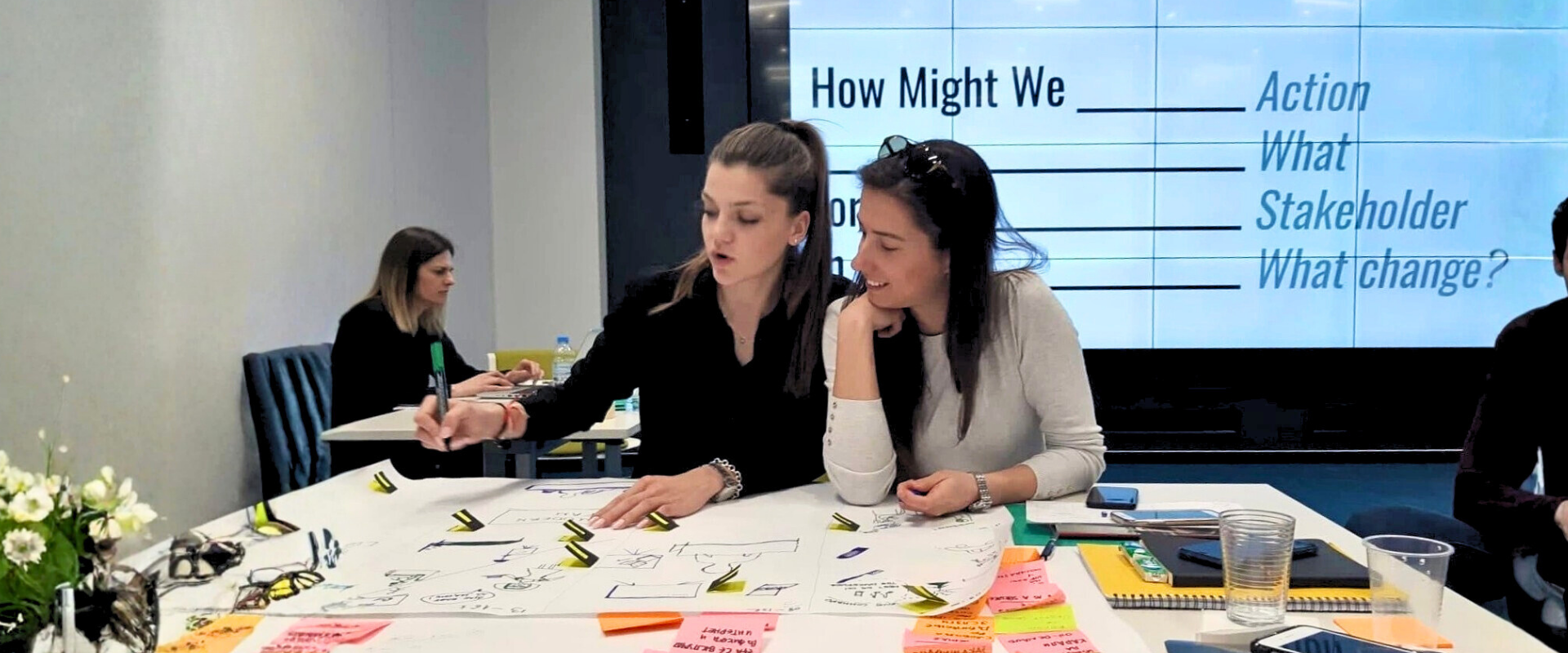
We facilitated two separate Design Thinking workshops, each tailored to the specific needs of the institutions involved.

For the Free Legal Aid Agency, we began by conducting a focused user research session to understand how beneficiaries were interacting with the website—and where they were getting stuck. From this, participants moved into the empathy phase, mapping out user pain points and exploring real-world scenarios. The workshop then shifted toward ideation and prototyping, with teams developing more intuitive and accessible layouts. These prototypes were tested directly with users from the initial research group, and feedback was integrated to refine the solutions.

The result was a clear, actionable roadmap for improving the FLAA website—prioritizing usability for non-tech-savvy users and helping the agency more effectively deliver legal assistance through digital channels.

The second workshop brought together representatives from the Kosovo Judicial Council, court administrators, and other key stakeholders for a 2-day session. The focus here was improving the KJC website’s utility and transparency—especially around updating court dates, publishing decisions, and simplifying complex backend processes, such as applying for a Criminal Status Certificate.

Participants collaborated to pinpoint the most pressing issues and co-create a range of practical solutions, including user interface changes and process improvements. By the end of the session, the group had aligned on a set of realistic next steps to improve transparency and access for both internal users and the public.

Outcomes

  • Improved Digital Access: Both FLAA and KJC left with validated prototypes and roadmaps to revamp their websites, tailored to the needs of their end users.

  • More Inclusive Design: The workshops emphasized co-creation and inclusion, ensuring that beneficiaries and institutional staff contributed to the solution-making process.

  • Clearer Communication and Services: Proposed changes addressed usability, navigation, and access to critical legal services and information.

Sustained Innovation: The work fed directly into USAID’s broader innovation strategy, contributing to the Justice Innovation Incubator and promoting long-term user-centered improvements within the justice system.

Our work
Using Design Thinking to Improve Access to Justice in Kosovo
Read more  →
Helping Fintech Teams Build Real Solutions—Not Just Ideas
Read more  →
Validating TIP OF THE WEEK Globally Through Crowdfunding
Read more  →
View More

Implement change.
Automate smarter with AI.

Be on top of global trends.

Get in touch