
Designing and Launching a Ride-Hailing App for the Swiss Market

Client Overview

Luma—now known as Vertt—is a peer-to-peer ride-hailing platform based in Zurich, Switzerland. Positioned within the fast-evolving sharing economy, Vertt connects passengers looking for rides with private vehicle owners looking to earn income in their spare time. Built on microservices and hosted on AWS, the platform aims to bring efficiency, transparency, and a local touch to the ride-hailing experience in Switzerland.

The Challenge

In 2018, the vision for Vertt was clear: build a ride-hailing platform from scratch that could compete in a saturated market—and stand out. The challenge wasn’t just to design an app—it was to craft a full digital product, from interface to strategy, and balance a two-sided marketplace from day one.

Vertt needed a partner to lead product discovery, design a user-first experience, and co-develop a go-to-market strategy. The goal was to launch a platform that felt intuitive, local, and uniquely Swiss—one that could grow driver and passenger adoption in parallel.

Our Approach

From the earliest conversations, we understood that Vertt needed more than just an app—it needed a complete ecosystem. Working closely with the founder and development partner doXteam, we took an agile, collaborative approach that allowed us to stay aligned across product, design, and business development.

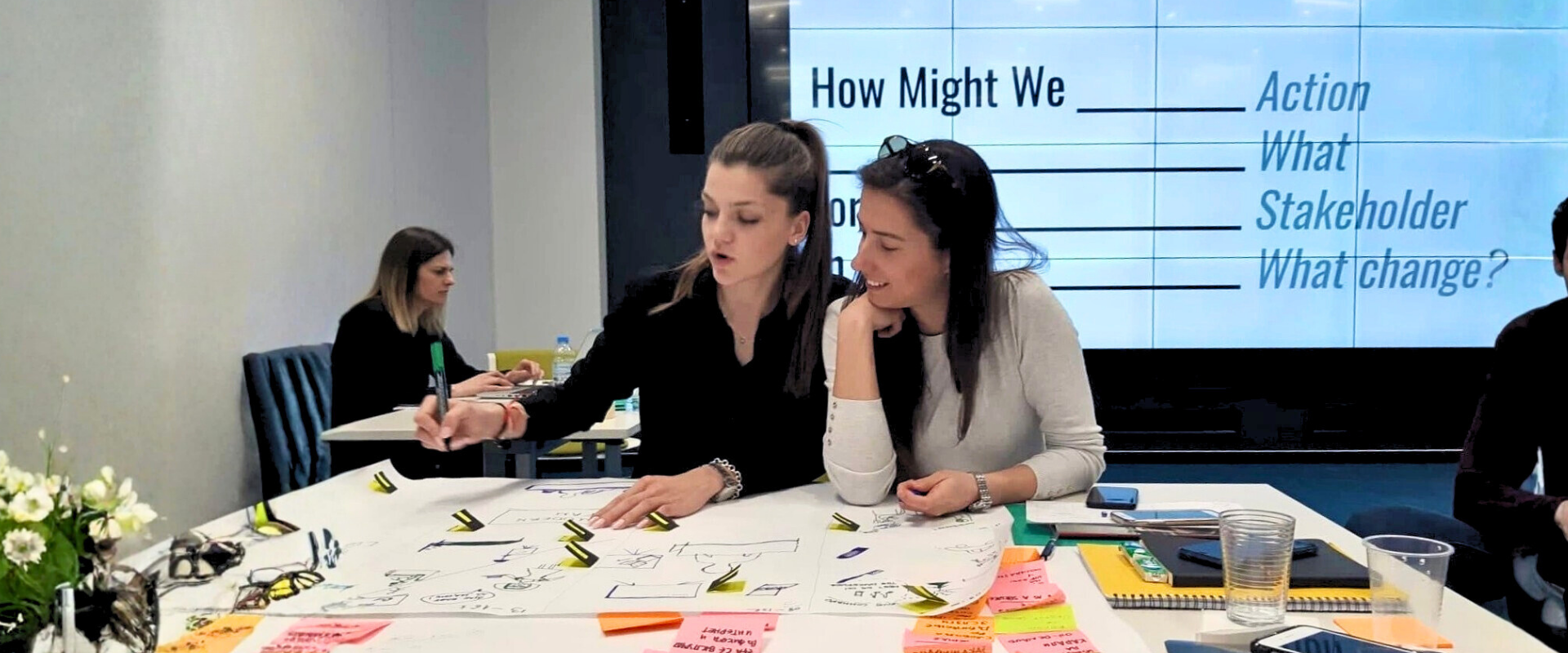
The project kicked off with a discovery phase focused on understanding the Swiss mobility landscape. We mapped out competitive offerings, studied the strengths and weaknesses of major ride-hailing players, and conducted user research to identify local expectations around safety, pricing, user experience, and convenience. These insights shaped everything that followed.

Once we had clarity, we moved into prototyping. We designed initial wireframes and tested the user flow for both drivers and passengers. Our goal was to reduce friction at every step—whether it was signing up, booking a ride, or rating a trip. After multiple iterations and user validation rounds, we finalized the full UI/UX for the app, with a visual identity aligned with Swiss design sensibilities: clean, minimal, and intuitive.

At the same time, we worked on business modeling and operational planning. We defined key internal processes—onboarding, support flows, data handling—and built detailed customer journeys to forecast how both user types would behave. This included drawing out risk scenarios that could arise at launch and creating protocols to address them.

For the launch strategy, we focused on treating drivers and passengers as two distinct user groups. Driver acquisition was prioritized first, with a clear onboarding flow and communication plan. Once enough supply was in place, we activated passenger outreach through location-based campaigns. The sequencing and timing of this rollout were key to creating a healthy balance between supply and demand from day one.

Outcomes

  • Successfully launched the platform in late 2019

  • Designed a customer-first UI/UX for both sides of the ride-hailing experience

  • Delivered a full go-to-market strategy and operations playbook

  • Built and tested internal processes, threat scenarios, and post-launch actions

  • Developed a scalable foundation for long-term platform growth

Our work
Launching Jas i Ti — A Digital Solution in a Tradition-Driven Wedding Industry
Read more  →
Launching Microtica – A Back-End Platform Built to Speed Up Development by 90%
Read more  →
Engaging Real Estate Professionals Through Content and Personalized Outreach
Read more  →
View More

Implement change.
Automate smarter with AI.

Be on top of global trends.

Get in touch